




 TV Operators
  Healthcare
  Digital Signage
  Hospitality
  Education



 TV Operators
  Healthcare
  Digital Signage
  Hospitality
  Education


With a growing dependence on digital operations, the deployment of Android devices in organizations is increasing rapidly. From tablets and rugged devices, to Android TVs and custom-built display units, IT and operations managers are often responsible for tens or even hundreds of thousands of these devices. From maintaining uniformity across every device to ensuring security compliance and system uptime, large-scale deployments introduce a unique set of challenges that demand a powerful, flexible, and scalable Android device management platform solution for large fleets.
This article examines the primary challenges of managing large Android fleets. It also explores advanced features crucial for effective fleet management and how the right device management platform empowers organizations to scale with confidence.
Challenges IT Managers Face With Large Device Fleets
Managing a fleet of over 100,000 Android devices is a highly complex operation that requires much more than basic device tracking or remote access. IT managers must maintain stability, compliance, and performance across diverse environments and user bases, all while keeping costs low and ensuring high uptime. Key challenges include:
1. Consistent Configuration Across Devices
With devices spread across regions, departments, or customer touchpoints, ensuring a consistent setup is crucial. Without centralized control, slight configuration inconsistencies can lead to compatibility issues, security gaps, or failed updates.
2. Security at Scale
Each device in a large fleet is a potential entry point for vulnerabilities. Securing all devices involves controlling app installations, enforcing encryption, managing network access, and ensuring that only authorized users interact with the system. Achieving this level of enforcement is virtually impossible without a dedicated Android device management platform.

3. Real-Time Visibility and Troubleshooting
As the device fleet grows, so does the risk of blind spots. Without real-time insights into device performance and status, minor issues can escalate into widespread problems, resulting in costly downtime and frustrated users.
4. Timely Updates and Patch Management
Rolling out software or firmware updates manually to thousands of devices is not feasible. Automating and scheduling these updates, while verifying compliance post-deployment, is essential to avoid system drift and security vulnerabilities.
5. Minimizing Support Costs
Manual troubleshooting and support for thousands of devices is cost-prohibitive. IT teams need scalable tools that enable them to remotely monitor, diagnose, and fix issues without the need for technician visits or lengthy support calls.
Managing large Android fleets is both a technical and operational challenge that requires the right enterprise-grade tools.
Beyond Basics: Driving Efficiency With Advanced MDM Features
To effectively manage Android fleets at scale, IT and operational leaders must move beyond the basics and embrace advanced mobile device management (MDM) capabilities tailored for high-volume environments. Here are the key features to look for when choosing an Android device management platform:
1. Robust Device Grouping
When managing thousands of devices, being able to categorize and group them intelligently is vital. Grouping by location, role, department, or hardware model enables IT teams to apply targeted policies and perform bulk actions, thereby improving efficiency and control.
2. Powerful Policy Automation
Manual policy enforcement is both time-consuming and prone to errors. Advanced Android device management solutions provide automation engines that can automatically push security settings, app configurations, network restrictions, and firmware updates based on a device profile or group. This not only ensures consistency but also frees up IT resources for more strategic tasks.
3. Profile-Based Configuration Management
Creating and deploying configuration profiles for different user types or usage scenarios allows IT teams to customize devices at scale. Whether for field agents, in-store kiosks, or classroom tablets, pre-built profiles ensure every device is set up accurately and ready to perform.
4. Real-Time Device Intelligence and Analytics
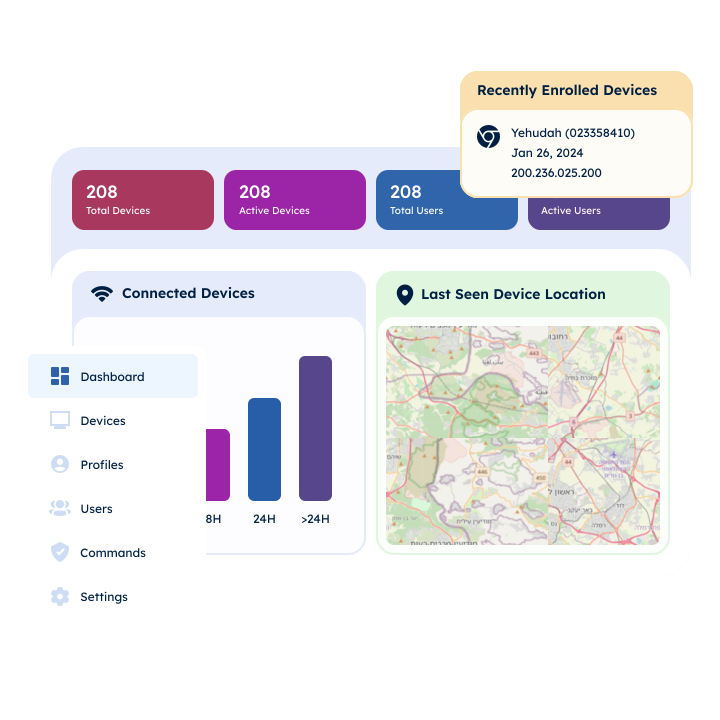
Comprehensive real-time analytics are necessary for IT managers to understand device usage patterns, detect anomalies, and monitor compliance at scale. Dashboards should provide metrics on battery health, storage capacity, app activity, location data, and more, enabling proactive intervention before issues escalate.
5. Remote Support and Control
With the ability to view the screen and remotely control devices, IT teams can diagnose and resolve issues without requiring end-user cooperation or on-site visits.
6. Scalability and Cloud Infrastructure
The MDM platform must be built for scalability, supporting high availability, robust performance, and centralized management from a cloud-based infrastructure. This ensures seamless control whether you’re managing 10,000 or 100,000 devices.
7. Kiosk and Lockdown Modes
For customer-facing or dedicated-use devices, the ability to lock devices into specific apps or usage modes helps prevent tampering and misuse. Kiosk mode enforces purpose-specific usage and extends device lifespan by reducing risk.
8. Seamless Integration With Android Enterprise
A robust Android device management app should support key Android Enterprise features, including zero-touch enrollment, managed Google Play, and work profiles. These enhance security and simplify enrollment, especially across large fleets.
By implementing these advanced features, IT managers can ensure operational consistency, boost performance, and minimize human capital costs.

How Radix Powers Scalable Android Device Management
When it comes to a large-scale Android device management platform, Radix is purpose-built for volume, speed, and simplicity. It combines centralized control with powerful automation and real-time intelligence, empowering IT and operations teams to oversee large fleets without sacrificing control or security.
Here’s how Radix addresses the most demanding challenges in large-scale Android device management:
1. Proven Scalability
Radix is designed to manage fleets ranging from a few hundred devices to hundreds of thousands, without performance degradation. Its cloud-native architecture ensures seamless operations and real-time access, even in distributed environments.
2. Advanced Automation Engine
The platform’s rule-based automation capabilities enable IT teams to set up powerful workflows, automatically applying policies, pushing updates, assigning apps, or triggering alerts based on real-time conditions. This drastically reduces the need for manual oversight.
3. Intelligent Grouping and Profiling
With Radix, devices can be grouped based on virtually any parameter, including region, function, hardware, or user role. Custom profiles can be deployed automatically, ensuring every device is configured correctly from the moment it’s activated.
4. Device Intelligence & Analytics Module
Radix’s built-in analytics dashboard delivers a comprehensive, real-time view of your entire Android fleet. IT teams can monitor health metrics, usage trends, and compliance status in a single pane of glass, empowering them to make faster, data-driven decisions.
5. Seamless Remote Support
With integrated remote control, screen sharing, and issue resolution tools, Radix makes remote support a breeze, even at scale. Devices can be accessed and troubleshooted from anywhere, reducing the need for truck rolls or user assistance.
6. Android TV & Set Top Box Management
Radix is uniquely equipped to handle specialized Android-based devices, such as smart TVs and set-top boxes. It’s a dedicated Android TV & set-top box management solution that ensures robust control and optimized performance in media-rich environments.
Radix encompasses all the top-tier Android MDM features necessary for enterprise-grade management, making it a comprehensive platform for organizations serious about scaling their Android ecosystem with confidence.
Scale Your Fleet With Confidence
Choosing the right Android device management platform is one of the most critical decisions IT and operations managers will make when overseeing a large-scale deployment. It’s not just about control, it’s about visibility, security, automation, and ultimately, user satisfaction.
Radix delivers an enterprise-ready, highly scalable platform that simplifies even the most complex Android device operations. With powerful grouping, policy automation, and real-time analytics, Radix enables IT teams to stay ahead of issues, lower operational costs, and maintain a consistent, reliable device experience, no matter how large your fleet grows. Schedule your free demo today.
 Radix’s Security Infrastructure: What It Takes to Safeguard, Scale, and Simplify Device Management
  Fix Technical Issues Faster: A Guide to Remote Diagnostics and Device Troubleshooting Tools
  Cutting Costs and Improving Customer Support Efficiency With Smarter Device Management
  Device Manufacturers: Embed an Android Device Management App at the Firmware Level for a Competitive Edge
  How to Get Real-Time Device Analytics on Your Device Fleet Performance (And Why It Matters)