




 TV Operators
  Healthcare
  Digital Signage
  Hospitality
  Education



 TV Operators
  Healthcare
  Digital Signage
  Hospitality
  Education


Businesses across industries increasingly depend on fleets of digital devices to power their daily operations in our hyper-connected world. From customer-facing kiosks and tablets to digital signage and point-of-sale terminals, the reliability of these devices is critical to maintaining service quality and customer support efficiency. However, managing and supporting a growing fleet of devices can quickly become a logistical and financial burden.
Prolonged support calls, repetitive troubleshooting, and costly technician visits drain IT resources and inflate operational costs. We explore how smart device management can tackle these challenges head-on, cutting costs and boosting customer satisfaction through advanced, real-time technologies.
Managing Device Fleets at Scale
Operating a large fleet of mobile devices offers significant advantages, such as increased productivity, better communication, and enhanced adaptability. But these benefits also bring complex challenges.

Without the appropriate tools and approaches, it can be hard to keep devices secure, maintain optimal performance, and efficiently manage day-to-day operations. Whether you’re responsible for hundreds or thousands of devices, it’s important to recognize and address the core obstacles in device fleet management to ensure a seamless operation.
1. Setup and Configuration
Setting up and configuring hundreds or thousands of devices manually is labor-intensive, error-prone, and time-consuming. Without automation, IT teams must go through repetitive tasks, such as installing apps, configuring settings, and applying security policies, one device at a time. This slows down deployment and increases the chance of inconsistencies that can lead to issues down the line, tanking customer support efficiency.
2. Device Performance and Maintenance
Over time, devices can experience performance degradation due to software bloat, outdated firmware, or unmonitored usage patterns. Regular maintenance like updates, cache clearing, and diagnostics, is crucial to keep them running smoothly.
3. Compliance
Every device must comply with internal policies and external regulations, such as data protection laws or industry-specific standards. As such, organizations must enforce encryption, disable unauthorized apps, apply usage restrictions, and audit device activity. Maintaining compliance manually across a vast fleet increases risk and opens the door to regulatory fines or data breaches.
4. Device Protection
Devices used in public environments, such as in retail, education, or logistics, are vulnerable to both misuse and theft. IT teams must implement tracking, access restrictions, and remote lock/wipe capabilities. Without centralized control, it becomes extremely difficult to recover or secure, resulting in potential data loss and asset waste.
5. Scaling Efficiently
As businesses grow, the number of devices they need grows, too. But scaling device management processes manually doesn’t work. It creates bottlenecks, overburdens IT staff, and increases the risk of configuration errors. Instead, organizations need scalable, automated solutions that allow them to roll out and manage new devices without reinventing the wheel each time.
6. Fragmented Systems
Many organizations use a patchwork of tools for device inventory, remote support, user communication, and monitoring. These systems often don’t integrate well, leading to inefficiencies, data silos, and a lack of centralized visibility. Fragmentation also prevents IT teams from having a real-time, unified view of their device ecosystem. This makes issue resolution and decision-making more difficult.
7. Long, Repetitive Support Calls
Support agents typically spend a lot of time walking users through basic troubleshooting steps, which can be repetitive and unproductive. Without the ability to remotely view or control the device, diagnosing issues relies heavily on the user’s ability to describe the problem. This lengthens calls, impacts customer support efficiency, and drives up costs.
8. Costly Truck Rolls
For issues that can’t be resolved remotely, businesses often have to send technicians onsite, a process known as a truck roll. These visits are expensive (often costing hundreds of dollars each), time-consuming, and disruptive to operations. Reducing truck rolls is a key goal for any organization managing devices at scale.
9. Downtime
Any period during which a device is inoperable, due to failure, misconfiguration, or delayed updates, translates to lost productivity, revenue, or poor customer experience. For example, a downed point-of-sale terminal or kiosk can mean lost sales. At scale, even brief outages compound into a significant business impact. Without proactive monitoring and fast remote remediation tools, minimizing downtime becomes a major challenge.

These challenges significantly hinder customer support efficiency, increase costs, and strain both IT teams and service operations. The crux of the issue lies in outdated or limited device management strategies that stop at inventory tracking or remote configuration. What businesses need today is a holistic approach that supports both the device and the user in real time.
This is where advanced device management solutions step in. They not only streamline operations but also transform the support experience into a faster, smarter, and more cost-effective process.
Strategies to Boost Customer Support Efficiency
The future of customer support lies in proactive, intelligent systems that empower teams to solve problems before they escalate. Modern device management solutions, especially those leveraging real-time data and automation, are central to achieving these goals.
The following key strategies can help you improve customer support efficiency:
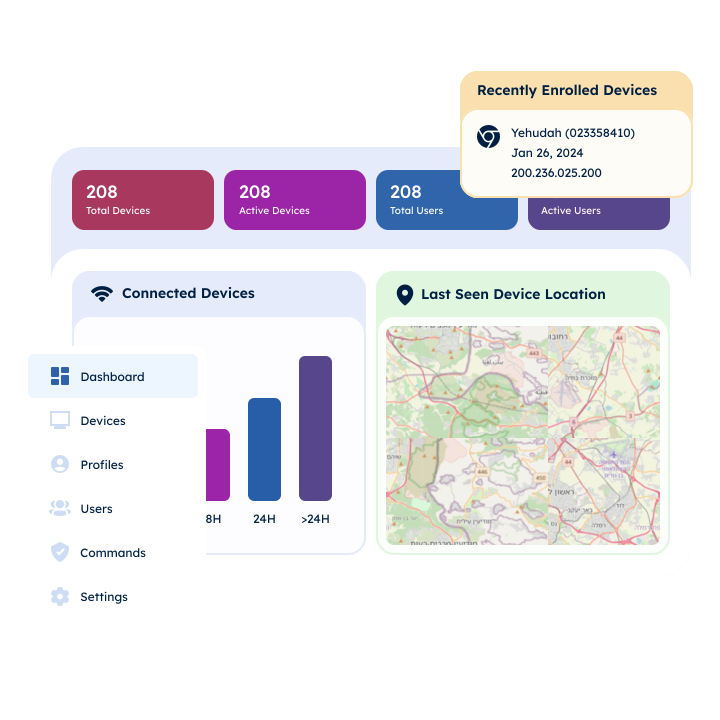
- Gather Real-Time Data. Real-time device data allows IT teams to make instant, informed decisions. Whether they can identify a pattern of failing updates or spot connectivity inconsistencies across a region, real-time insights enable swift resolution and prevent recurring problems.
- Analyze Data for Proactive Support. Data-driven decision-making lets support teams identify trends that may not be apparent immediately. This facilitates preemptive maintenance, smarter resource allocation, and a significant reduction in user complaints.
- Enhance First-Call Resolution (FCR). With the right tools in place, support agents can resolve issues on the first attempt more often. They improve outcomes and reduce support overhead as a result.
With these strategies, you can transform your support operations from reactive to proactive. You’ll resolve more problems remotely, in less time, and at a lower cost.
How Radix Empowers Organizations to Support Their Devices’ Operations
Radix’s advanced device management platform gives IT and operations managers a powerful arsenal to achieve both operational cost savings and superior customer support efficiency.
Remote Diagnostics
With the Radix Remote Support Module, IT staff can instantly access device logs, check network status, and remotely control devices without disrupting the user experience. Full remote access and visibility mean many issues that once required onsite technician visits can now be resolved from a central support hub. Shorter calls and fewer dispatches translate directly into lower costs and better use of IT resources.
Automated Issue Resolution
Through preconfigured scripts and policies, common device issues can be identified and resolved automatically. This reduces the need for user intervention and instead frees up support staff for other critical tasks.
Proactive Monitoring
Continuous monitoring helps identify early warning signs, such as degraded performance or hardware anomalies. This allows teams to act before users even notice a problem, preventing escalations and reducing downtime.
Improved First-Call Resolution
Radix’s Customer Care Module lets agents communicate directly with end-users, see their screens, guide them interactively, and fix technical issues remotely. As a result, you’ll drastically reduce support call durations and improve first-call resolution rates.
Drive Cost Savings and Customer Support Efficiency With Intelligent Device Management
Whether you manage digital signage in a retail chain, tablets in a school district, or check-in kiosks in a hotel, Radix gives your team the tools to ensure every device operates at peak performance. They also make every support interaction as fast and effective as possible. What’s more, Radix offers built-in compliance with Google TV B2B policy, which enables large deployments in certain industries, such as hospitality.
Through intelligent device management platforms like Radix, IT and operations teams can reduce call durations, avoid unnecessary technician dispatches, and improve first-call resolution. The result? Happier customers, less pressure on support teams, and significant cost savings across the board.
Ready to transform your support operations and your bottom line? Request a demo today.
 Radix’s Security Infrastructure: What It Takes to Safeguard, Scale, and Simplify Device Management
  Scaling With Confidence: Choosing the Right Android Device Management Platform for a Large Device Fleet
  Fix Technical Issues Faster: A Guide to Remote Diagnostics and Device Troubleshooting Tools
  Device Manufacturers: Embed an Android Device Management App at the Firmware Level for a Competitive Edge
  How to Get Real-Time Device Analytics on Your Device Fleet Performance (And Why It Matters)